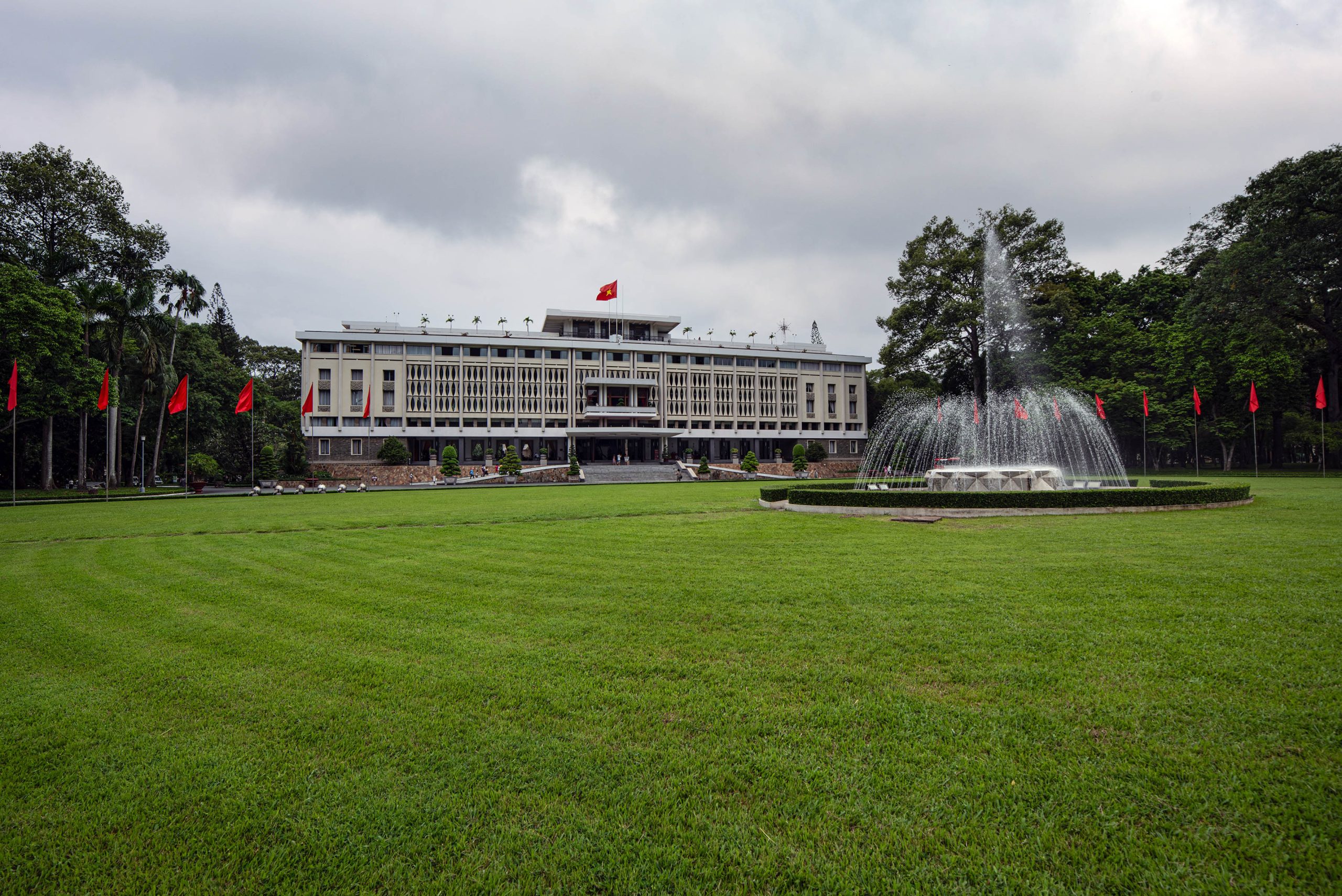
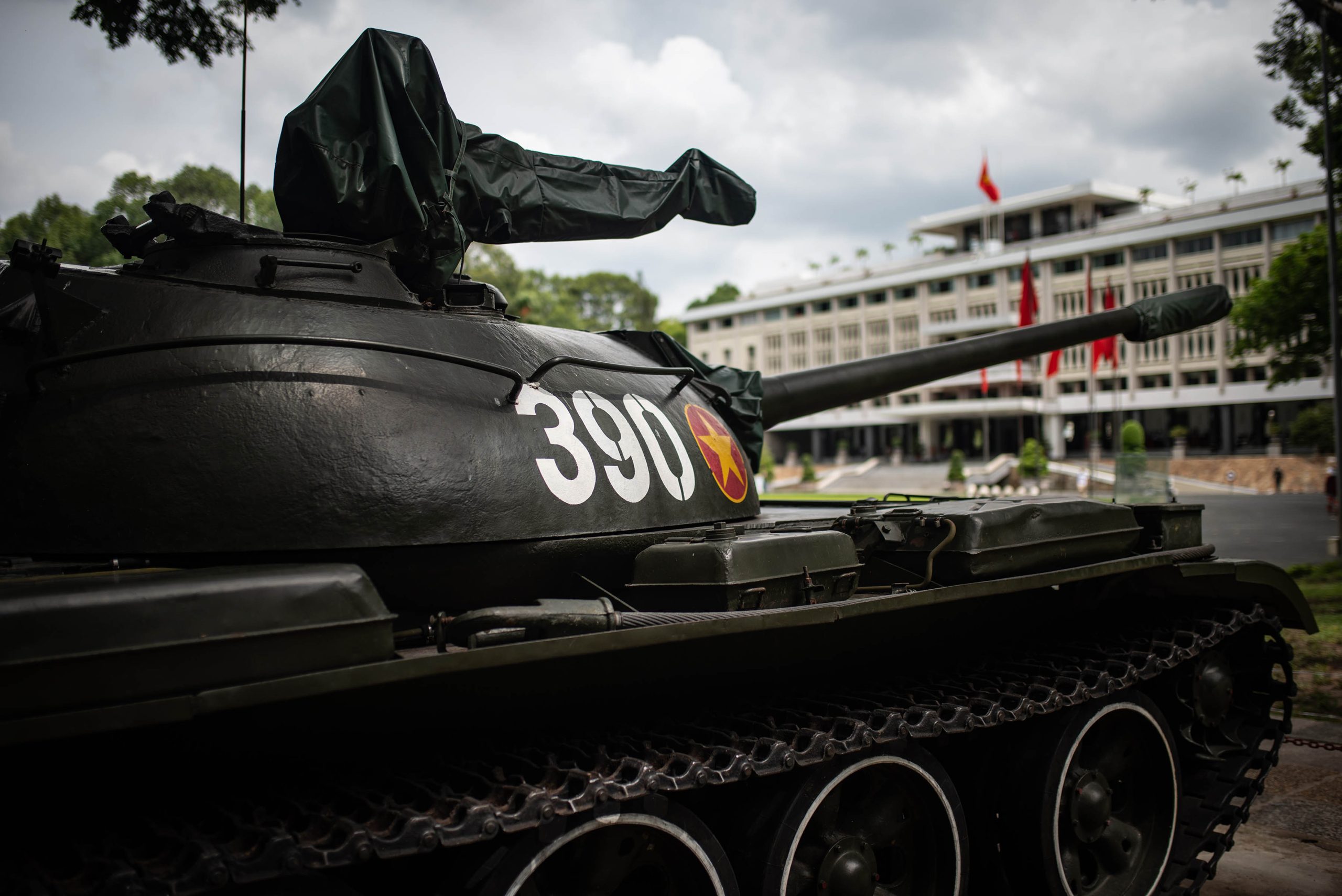
The Reunification Palace (Dinh Độc Lập), located at 135 Nam Ky Khoi Nghia Street, District 1, Ho Chi Minh City, stands as one of Vietnam’s most significant historical landmarks. This modernist structure, completed in 1966, represents a pivotal moment in Vietnamese history when North Vietnamese tanks crashed through its gates on April 30, 1975, marking the end of the Vietnam War.
Originally built between 1962 and 1966 by architect Ngô Viết Thụ, the palace replaced the former Norodom Palace, which was damaged in a 1962 bombing. The five-story structure spans 120,000 square meters and sits amid 12 hectares of meticulously maintained gardens featuring tropical plants, walkways, and lawns.
The building’s distinctive architectural style combines modernist elements with traditional Vietnamese influences. The front facade features bold geometric lines and concrete screens inspired by traditional bamboo arrangements. The structure’s most recognizable elements are its square columns, horizontal lines, and the distinctive concrete pergolas that provide shade and visual interest.
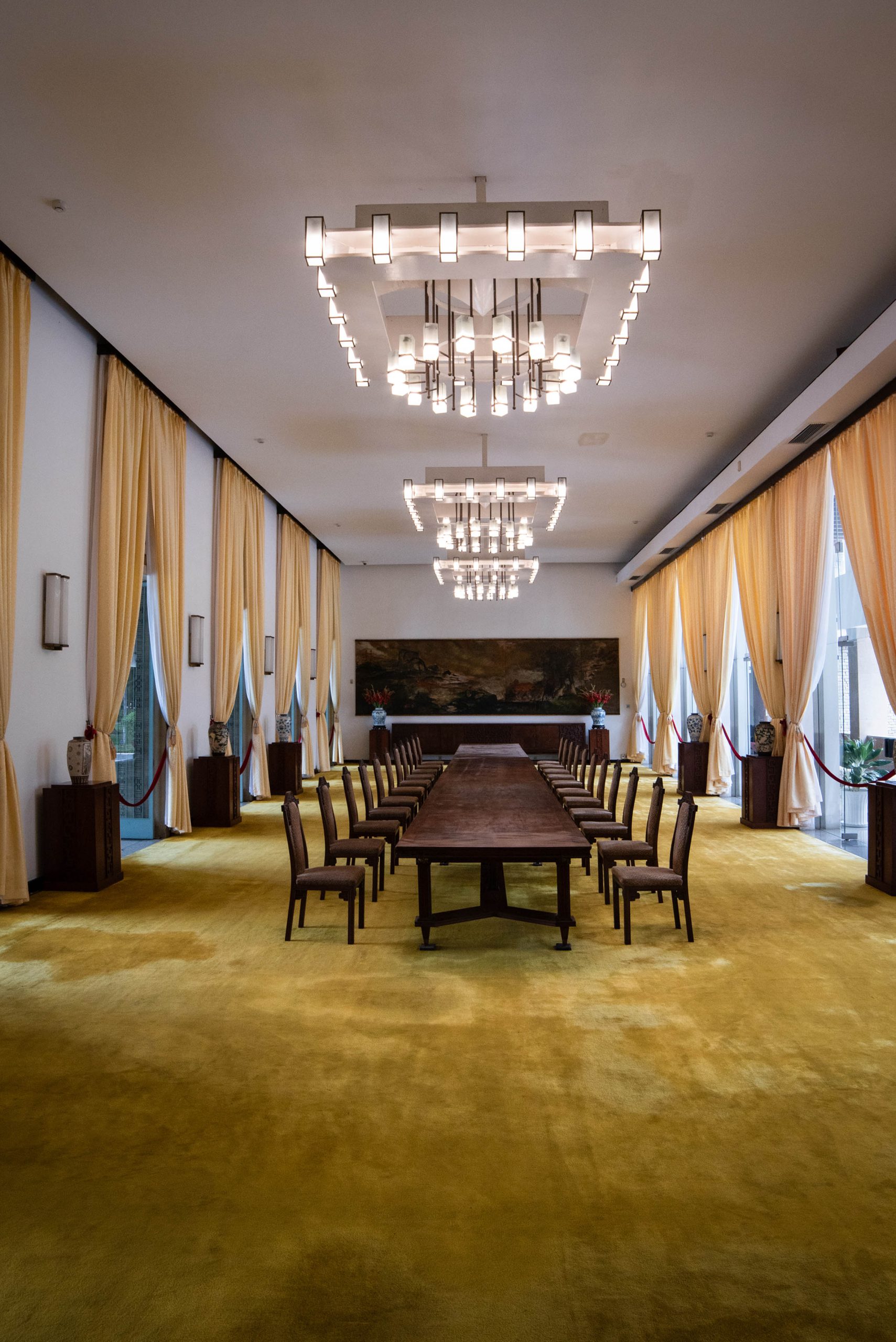
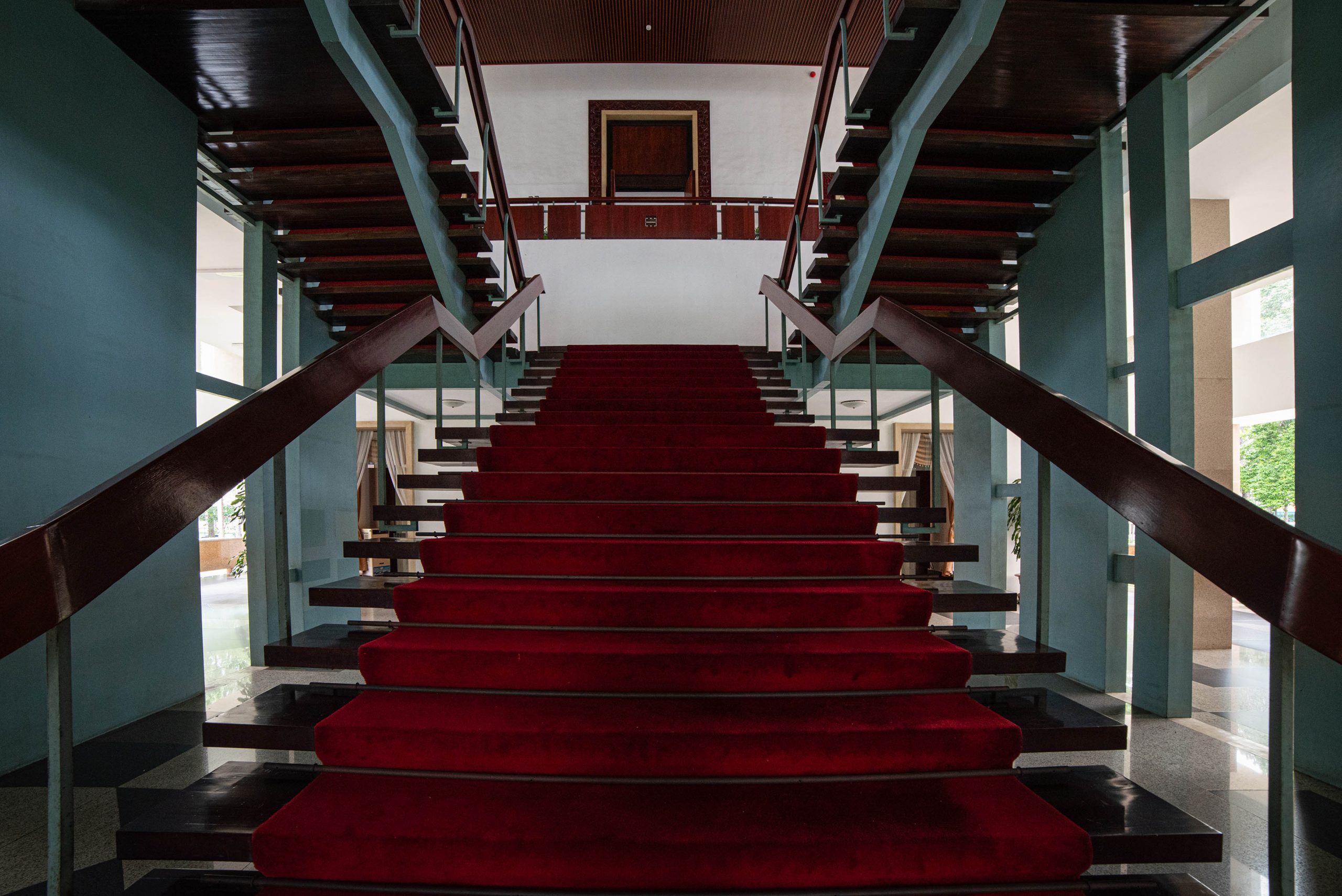
Inside, the palace remains largely unchanged since 1975, offering visitors a glimpse into 1960s Vietnamese architecture and design. The first floor houses meeting rooms, including the formal reception hall with its red carpet and elaborate crystal chandeliers. These rooms feature detailed lacquer paintings by prominent Vietnamese artists and host various ceremonial functions.
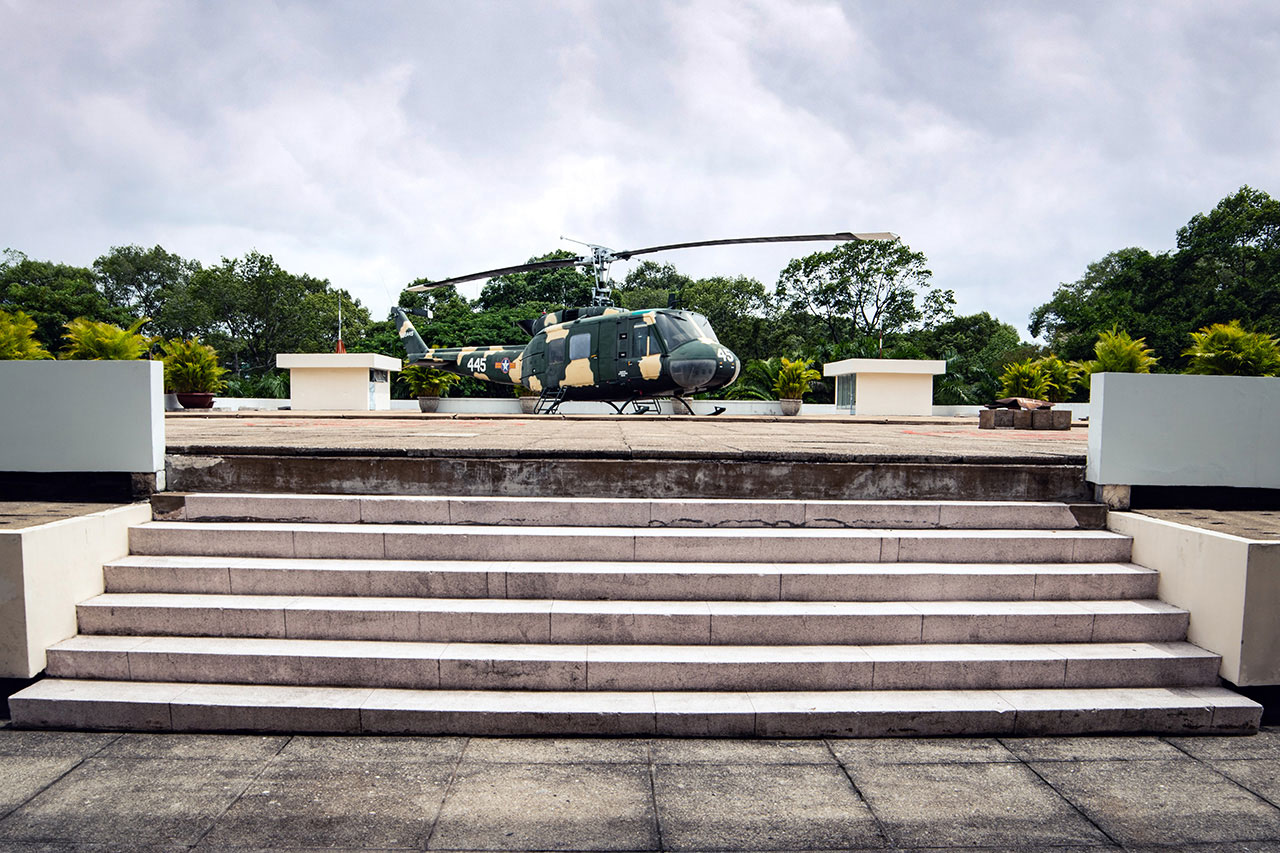
The second floor contains the presidential receiving room, complete with a dining hall and entertainment areas. The former presidential living quarters occupy the third floor, featuring period furniture and personal items. The most intriguing area is perhaps the fourth floor, which houses a rooftop nightclub complete with a helipad and dancing hall where the president hosted parties.
In the basement, visitors find the building’s most historically significant area: a network of tunnels, telecommunications center, and war command room. The basement’s map room, radio broadcasting station, and strategy room remain equipped with original 1960s telecommunications equipment and military maps.
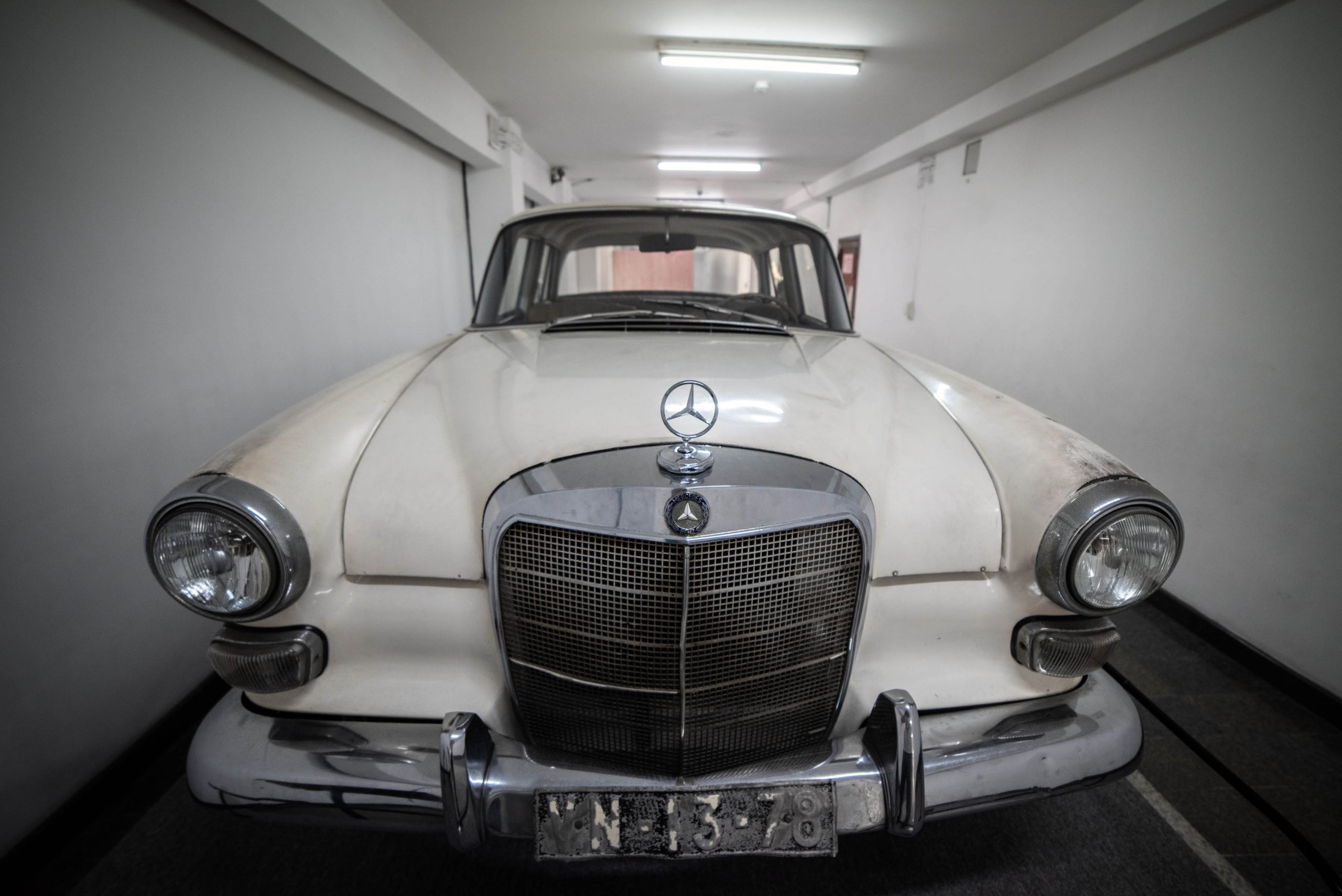
Throughout the palace, period details such as mod furniture, rotary phones, radio equipment, and vintage cars remain perfectly preserved. The decor reflects both Vietnamese traditional elements and 1960s modernist aesthetics, with detailed woodwork, silk screens, and period artwork throughout.
The palace grounds feature several notable elements, including:
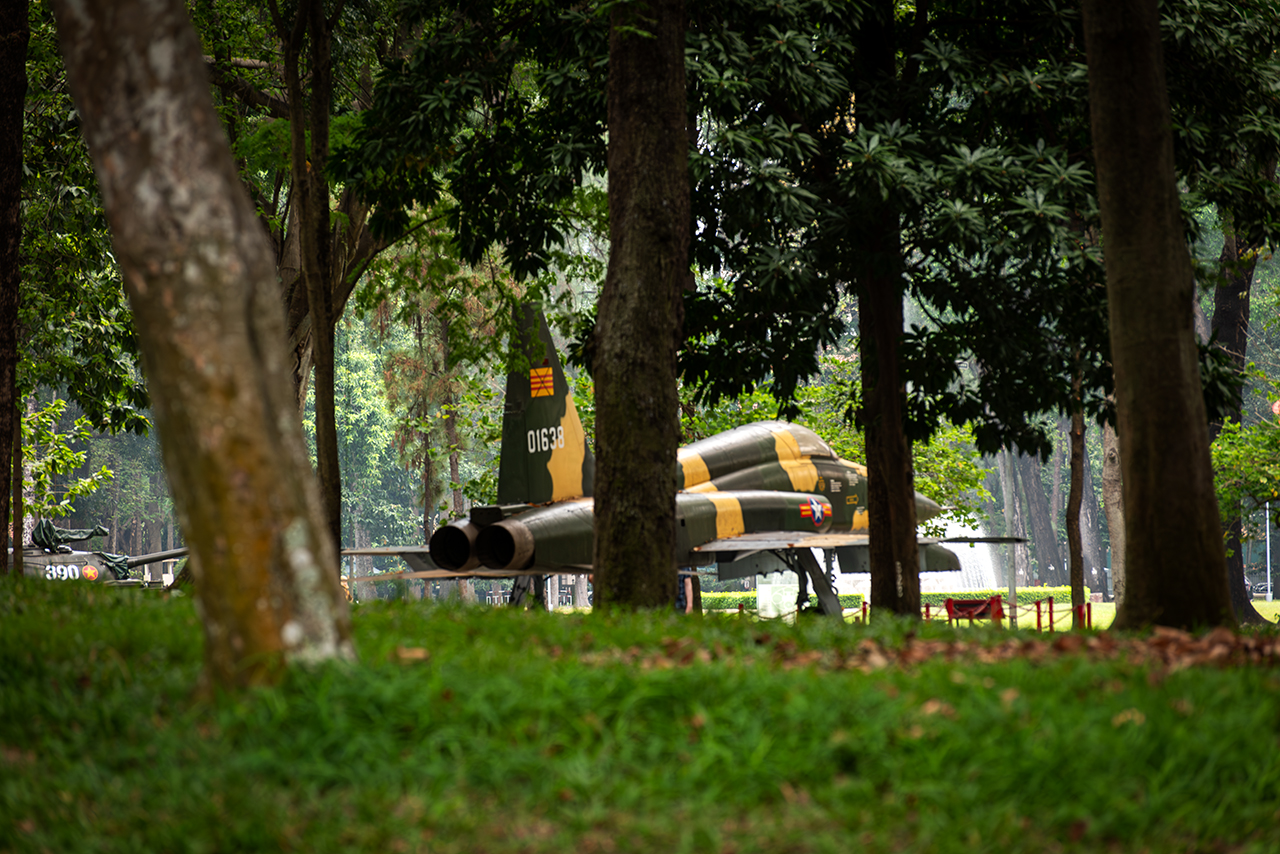
- Two original tanks from the 1975 liberation
- A replica of the fighter plane that bombed the palace in 1975
- Formal gardens with native plants and trees
- Underground bomb shelters
- Tennis courts
- A helipad
- Various ceremonial spaces for government functions
The building continues to serve as a museum and event space for government functions. Each room contains detailed information panels in both Vietnamese and English, explaining the historical significance and original function of the space.
Operating Hours:
- Daily from 7:30 AM to 11:00 AM
- Afternoon sessions from 1:00 PM to 4:00 PM
- Last admission 30 minutes before closing
Photography is permitted throughout most areas of the palace, though some restrictions apply in certain rooms. The building’s strong geometric lines, historical artifacts, and period details offer numerous opportunities for both architectural and documentary photography. The best natural light for exterior shots occurs during early morning or late afternoon, when the sun’s angle highlights the building’s distinctive architectural features.
Natural lighting inside varies by room and time of day, with the large windows in the state rooms providing ample illumination. The basement areas are artificially lit, requiring higher ISO settings for effective photography.