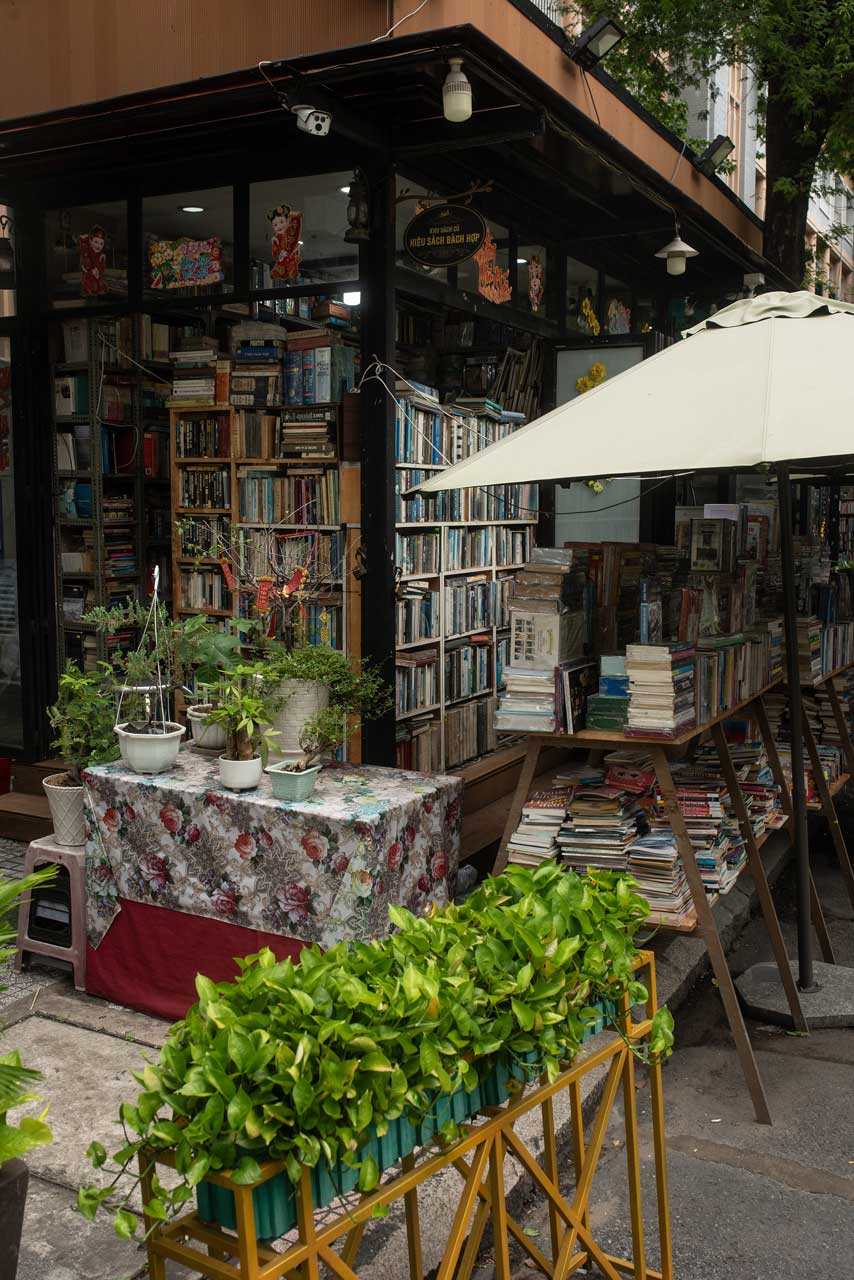
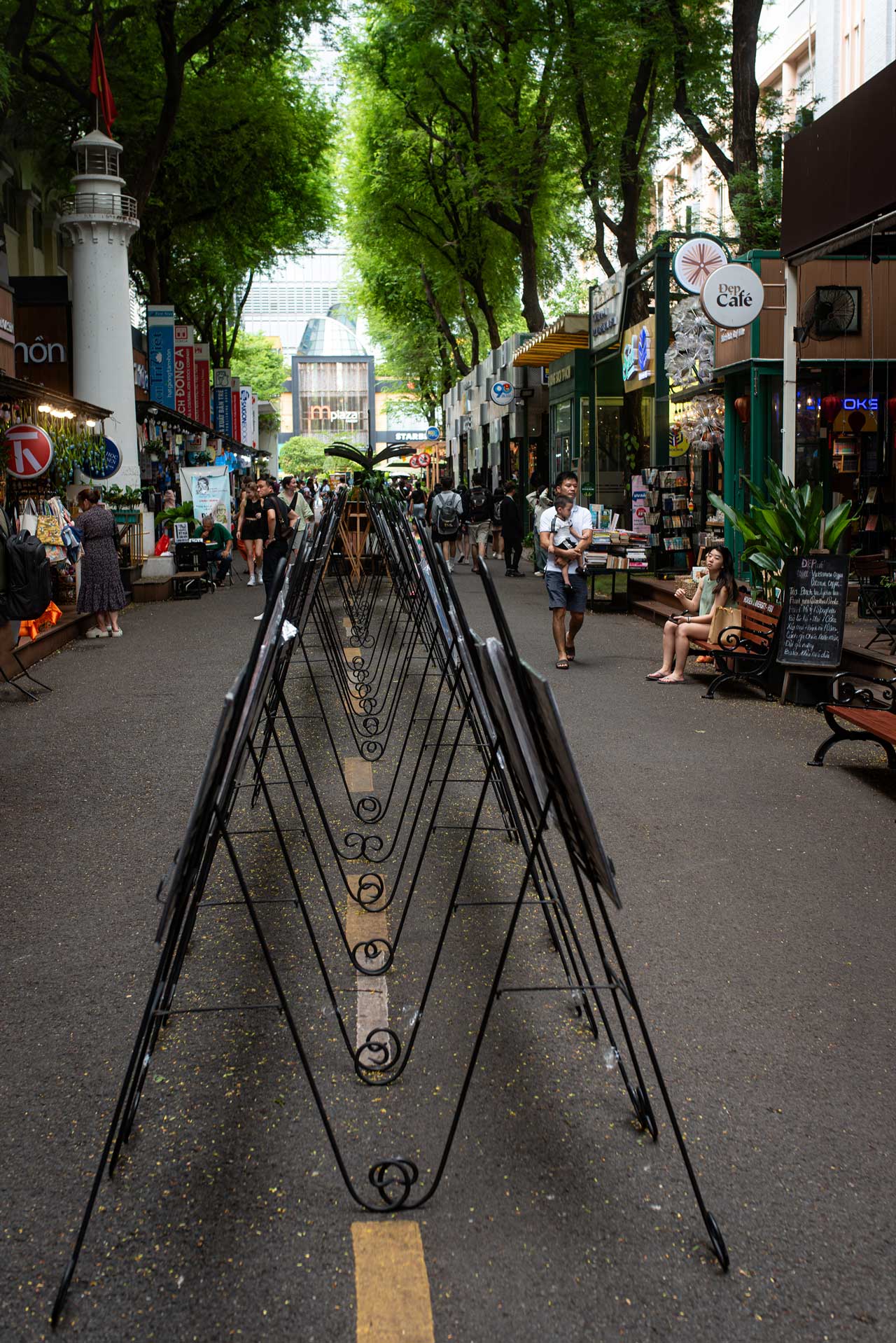
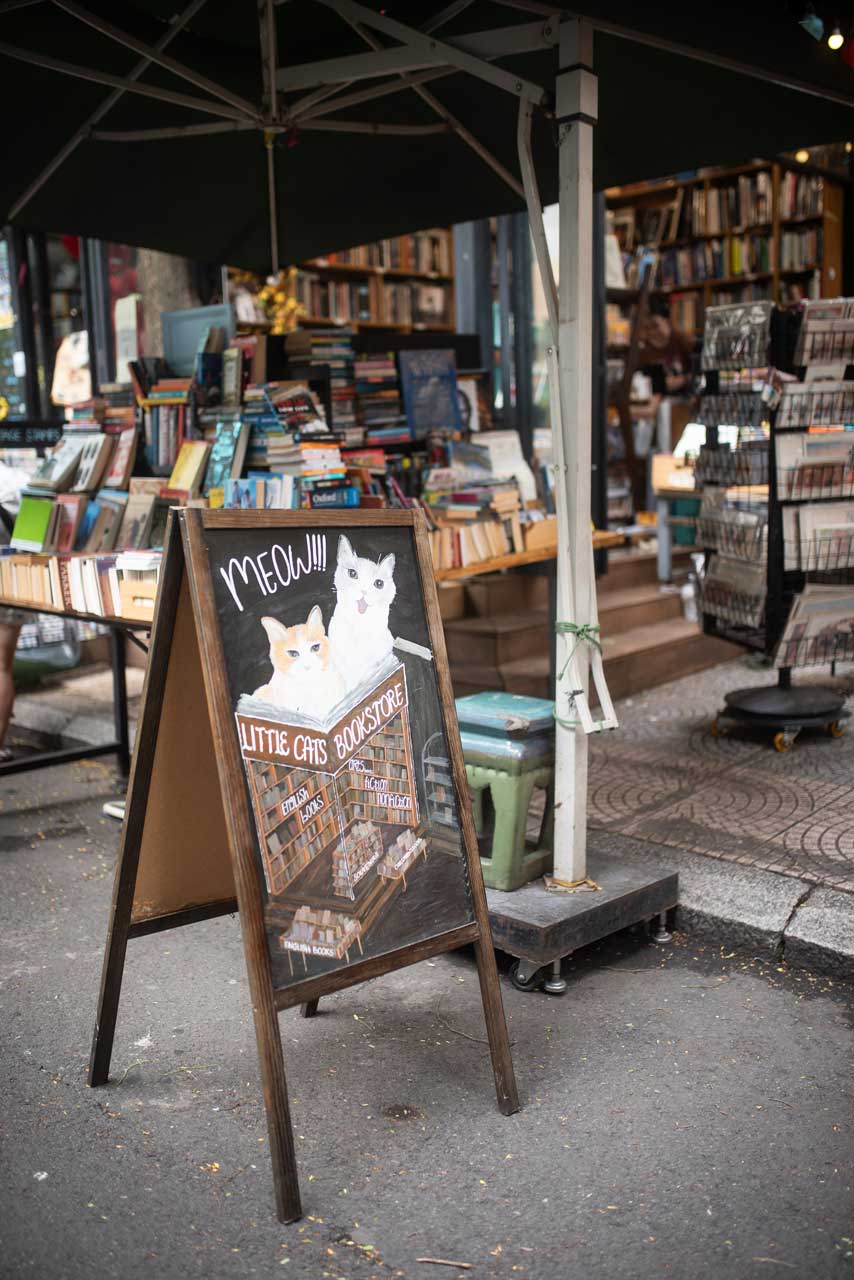
Nguyen Van Binh Book Street, commonly known as Saigon Book Street, is a 100-meter pedestrian-only street located in District 1, Ho Chi Minh City, between the historic Central Post Office and the People’s Committee Building. The end of the street opens onto the side of Notre Dame Cathedral, A great place to spend a few hours with the 20+ bookstores and cafes. There is even a small playground for the kids.
Officially opened in January 2016, this cultural project transformed a formerly unremarkable street into a lively literary hub celebrating Vietnam’s reading culture.
The street features twenty permanent book stalls housed in identical white steel and glass pavilions designed to blend seamlessly with the surrounding French colonial architecture. Each pavilion measures approximately 3 meters wide by 4 meters deep, with sliding glass doors and built-in lighting. The structures are arranged in two parallel rows along the street, creating a central walkway shaded by tall trees that predated the book street’s establishment.
The architectural design incorporates traditional Vietnamese elements with modern functionality. The pavilions’ roofs feature subtle curves reminiscent of traditional Vietnamese architecture, while their clean lines and transparent walls create an inviting, contemporary display space. Large windows allow natural light to illuminate the books during daytime hours and create an attractive glowing effect in the evening when interior lights are lit.
The street’s infrastructure includes carefully planned drainage systems, decorative stone paving, and modern lighting fixtures that complement the historic surroundings. Benches and small seating areas are strategically placed along the thoroughfare, encouraging visitors to browse and read in comfort. Several coffee shops integrated into the design provide refreshments and additional seating options.
Each book pavilion specializes in different genres or publishers, offering everything from contemporary Vietnamese literature to foreign language books, children’s titles, and academic texts. The spaces are climate-controlled to protect the books from humidity and maintain a comfortable environment for browsers.
At the street’s northern end stands a multi-purpose cultural space used for book launches, author talks, and literary events. This area features a small stage, audiovisual equipment, and flexible seating arrangements that can accommodate approximately 100 people. The space’s design incorporates sound-dampening materials to minimize noise pollution in the open-air environment.
Distinctive features include:
- Interactive digital displays providing information about Vietnamese literature and authors
- A children’s reading corner with colorful seating and educational murals
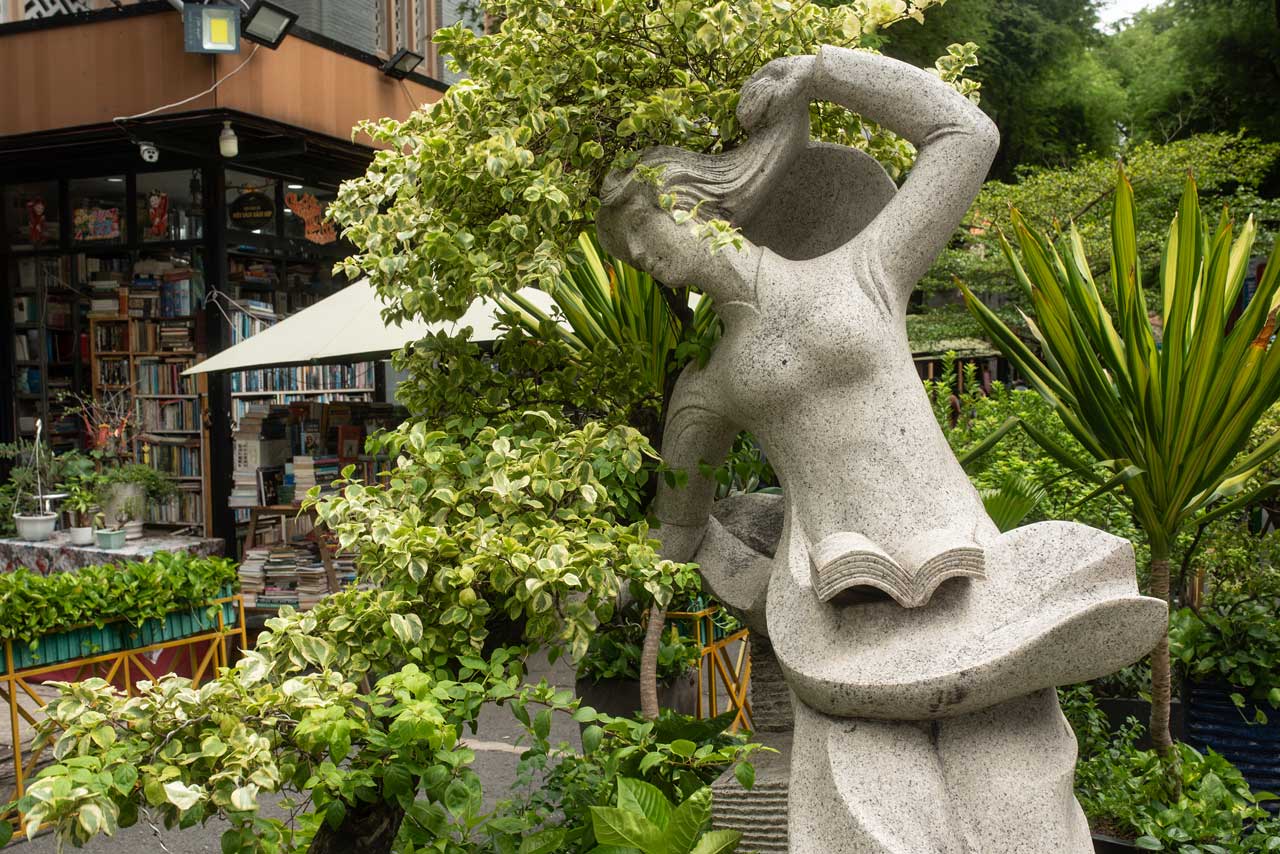
- Public art installations celebrating literature and learning
- QR code stations linking to digital literary resources
- Monthly themed decorations reflecting various literary celebrations or seasons
The street’s location is particularly significant, situated within Ho Chi Minh City’s historic core. It creates a cultural bridge between notable landmarks, including Notre-Dame Cathedral Basilica of Saigon, connecting the city’s literary present with its architectural past. The surrounding trees, many over 50 years old, provide natural shade and contribute to the street’s peaceful atmosphere despite its central location.
Special design considerations were implemented to preserve the historic character of the district while incorporating modern amenities. The lighting system, for example, uses warm LED fixtures that complement rather than compete with the historic buildings’ illumination. The pavilions’ height was carefully calculated to maintain sight lines to surrounding architectural landmarks.
For photographers, Saigon Book Street offers numerous compelling compositions, particularly during golden hour when the glass pavilions reflect the sunset and the street lamps create a warm glow. The linear arrangement of the book stalls creates natural leading lines, while the historic backdrop provides depth and context to images. The street is especially photogenic during major holidays when additional decorative elements are added, such as Tet (Lunar New Year) lanterns or Mid-Autumn Festival displays.
The space has become not only a commercial venue but also a cultural landmark that represents Ho Chi Minh City’s commitment to education and literacy, attracting both local readers and tourists interested in **Vietnamese culture and literature
Address: Nguyen Van Binh Street, Ben Nghe Ward, District 1, Ho Chi Minh City, Vietnam Hours: 8:00 AM – 10:00 PM daily