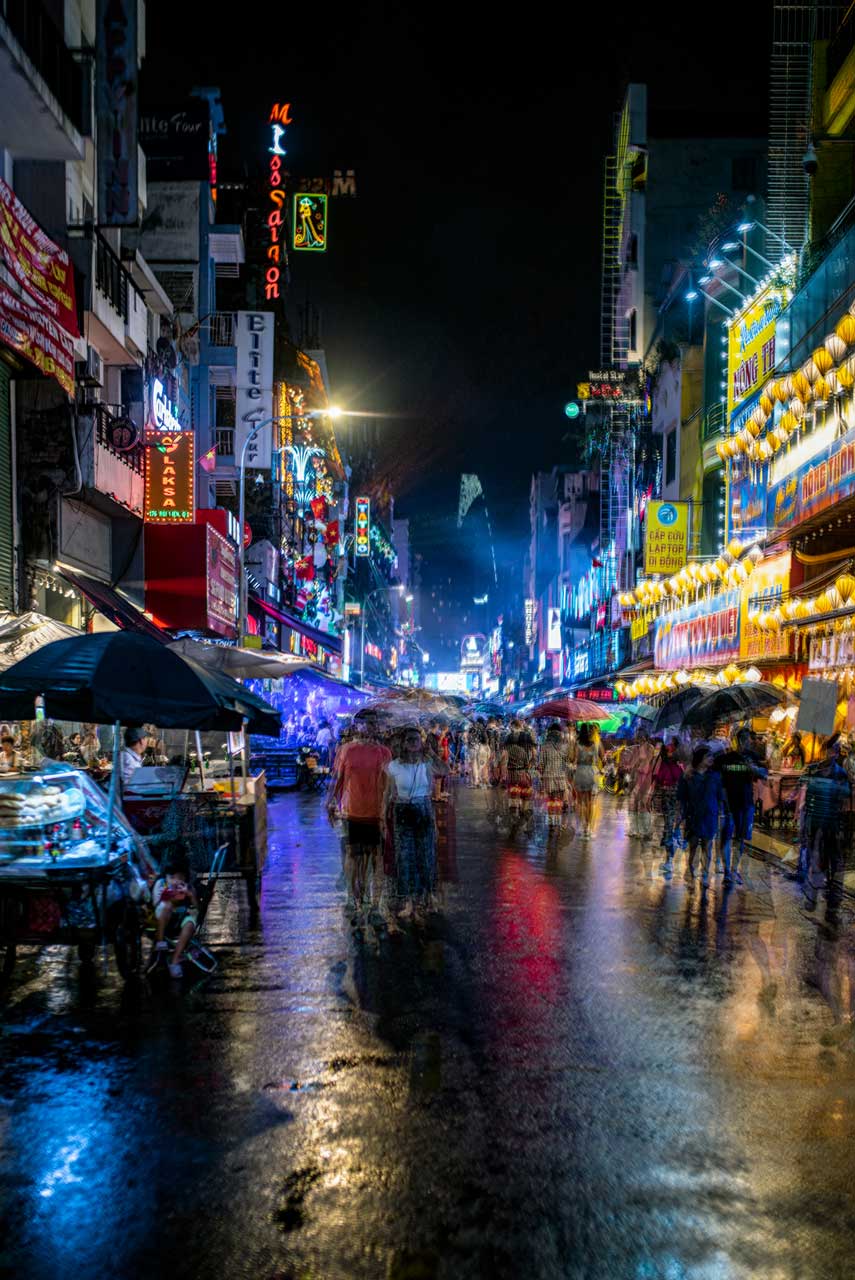
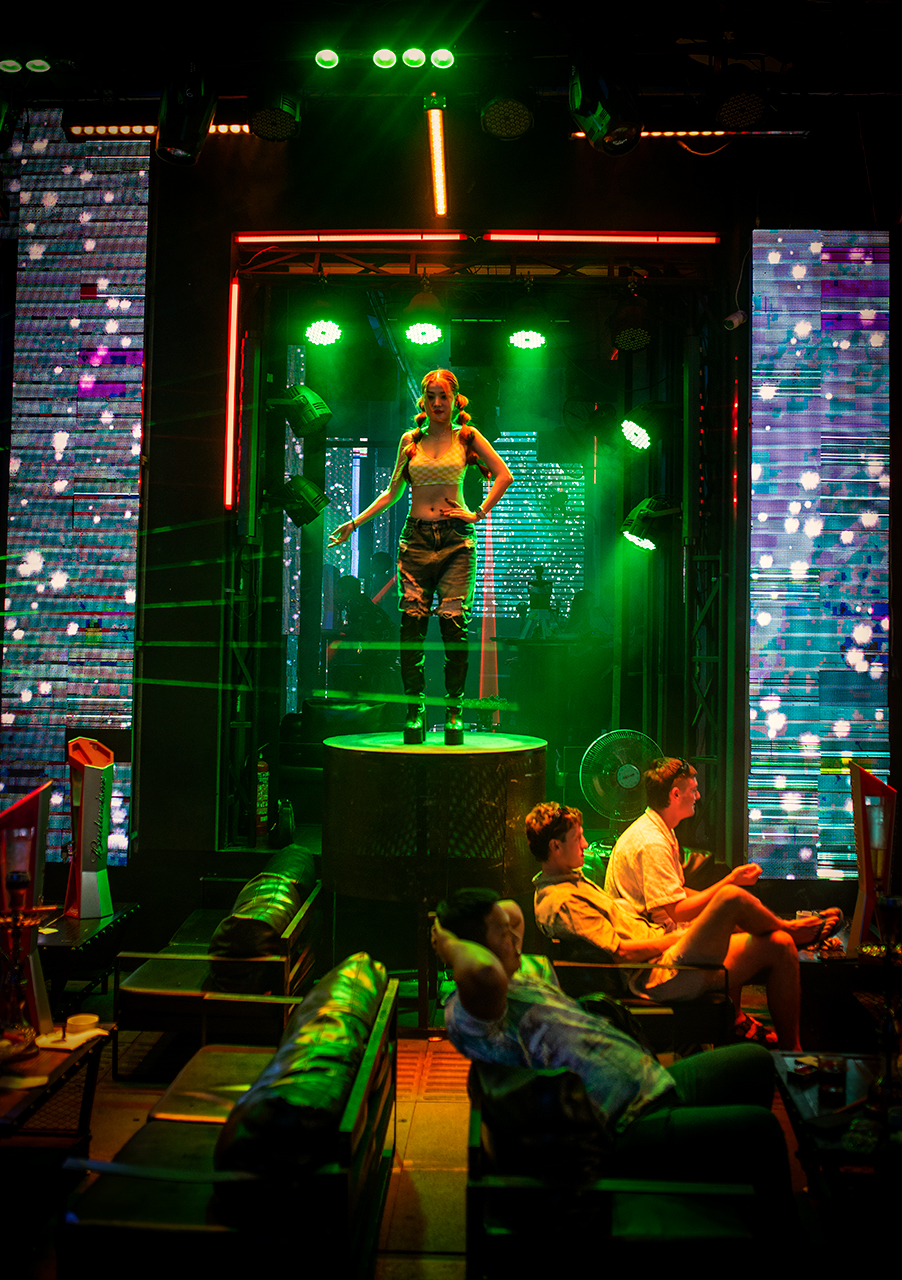
Bui Vien is sometimes called walking street. It is the entertainment center, the backpacker area and at least in parts, a red-light district. Drugs are not much of a problem though you will see “balloons” being used. Prostitution is a part of the scene with many happy-ending massage parlors and lounges with bar girls. Though safe as far as violent crimes go (there is a police branch on Bui Vien), your camera, phone, etc. should be protected.
Located in District 1 of Ho Chi Minh City, Bui Vien Street stretches approximately 700 meters from Tran Hung Dao Street to Do Quang Dau Street. This lively thoroughfare has transformed from a quiet residential area in the 1990s into the city’s most famous backpacker district and nightlife hub.
The street’s evolution began during the late 1990s when budget travelers discovered its affordable accommodations. Local families began converting their traditional tube houses into guesthouses and hostels, gradually establishing the area’s reputation as a backpacker haven. By the early 2000s, the street had become the epicenter of Ho Chi Minh City’s tourist scene.
Architecturally, Bui Vien showcases a mix of traditional Vietnamese shophouses and modern developments. The traditional buildings typically feature narrow facades (2-4 meters wide) but extend deep into the block (20-40 meters), a style known as “tube houses.” These structures usually rise 3-5 stories, with businesses occupying the ground floor and accommodations above. Many buildings retain their original French colonial influences, visible in their shuttered windows, balconies, and decorative moldings, though most have been modernized.
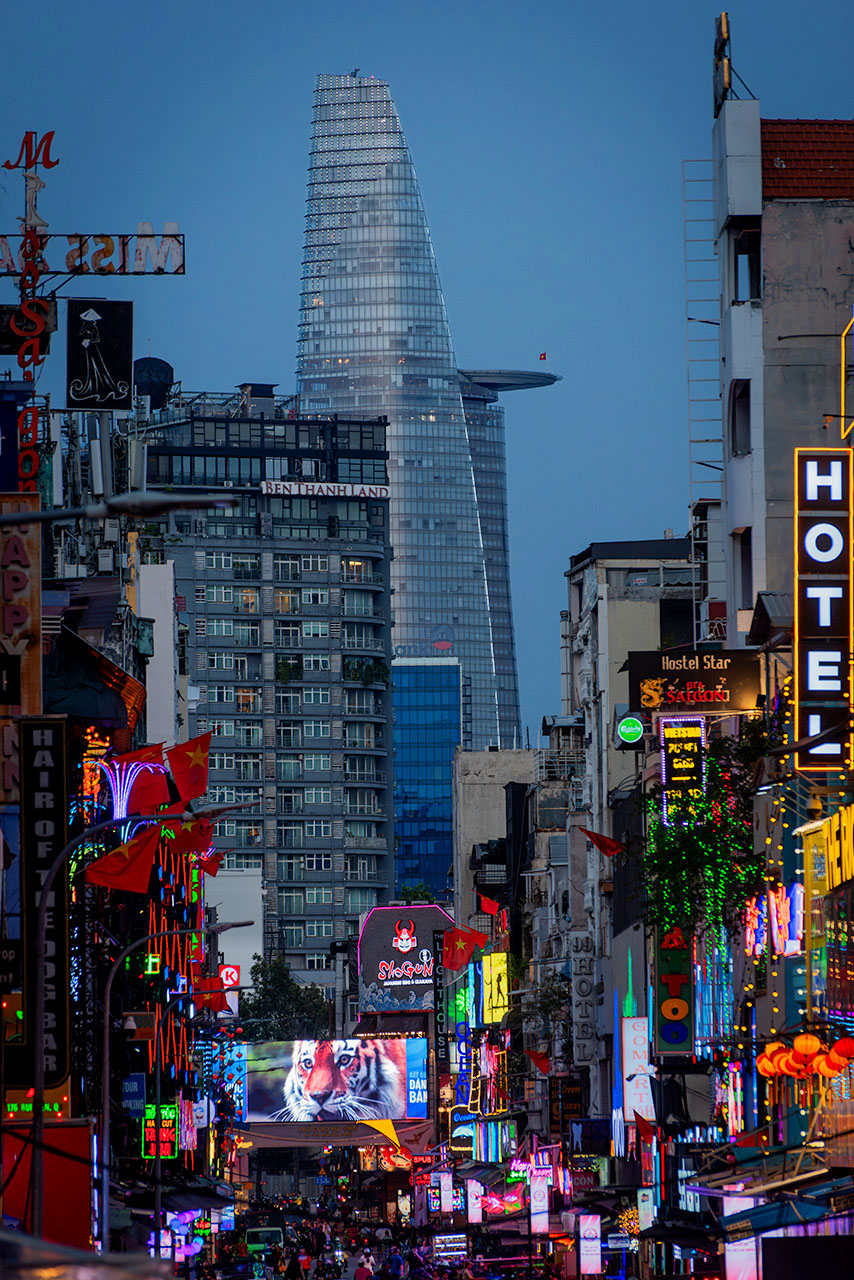
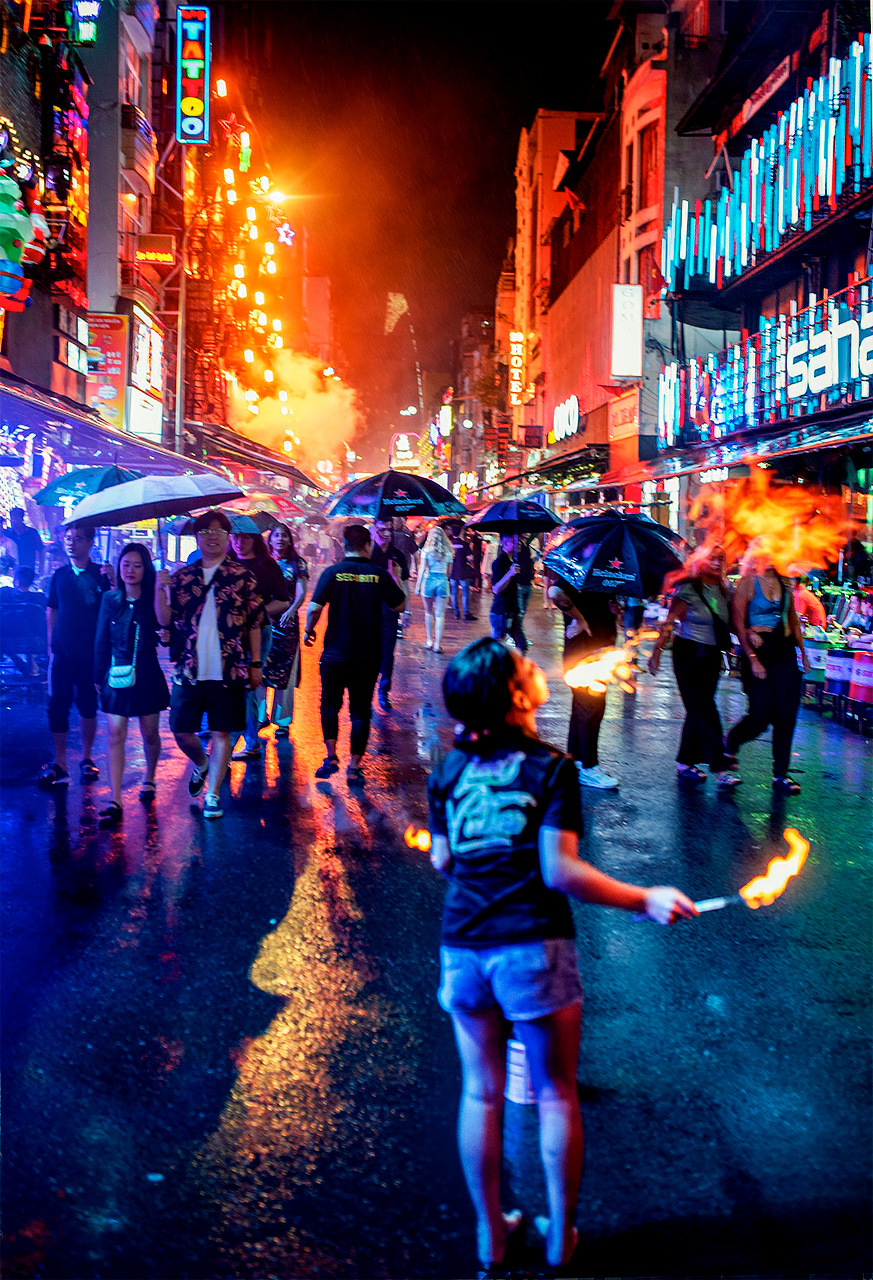
The street’s landscape is dominated by neon signs, string lights, and large advertising banners that create a colorful atmosphere after sunset. During recent renovations, the city widened the sidewalks and installed consistent paving, making the area more pedestrian-friendly. The street features several small alleyways (hems) branching off the main thoroughfare, leading to hidden bars, restaurants, and guesthouses.
Distinctive features of Bui Vien include:
- Street-side bars with characteristic low plastic stools spilling onto sidewalks
- Open-air massage parlors
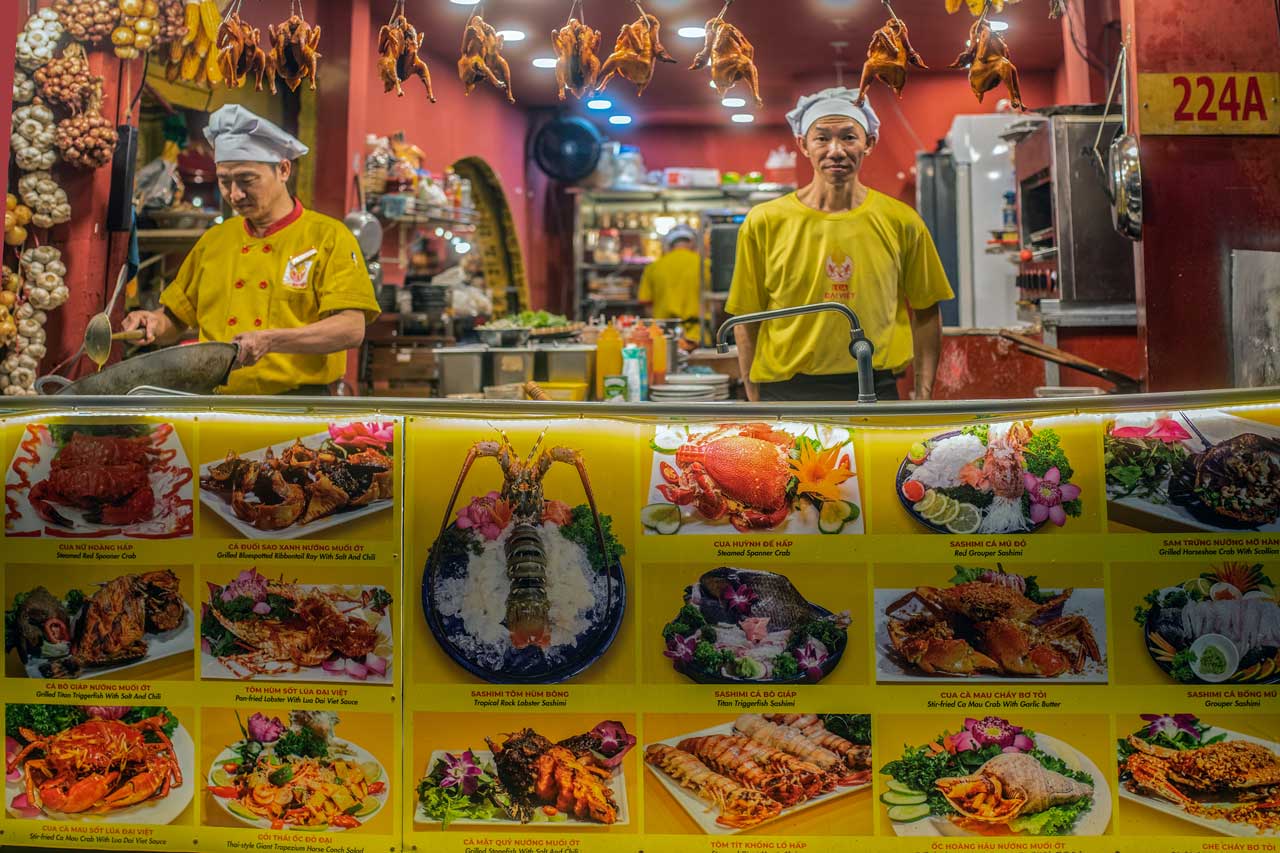
- International restaurants ranging from Vietnamese to Indian, Western, and Middle Eastern cuisine
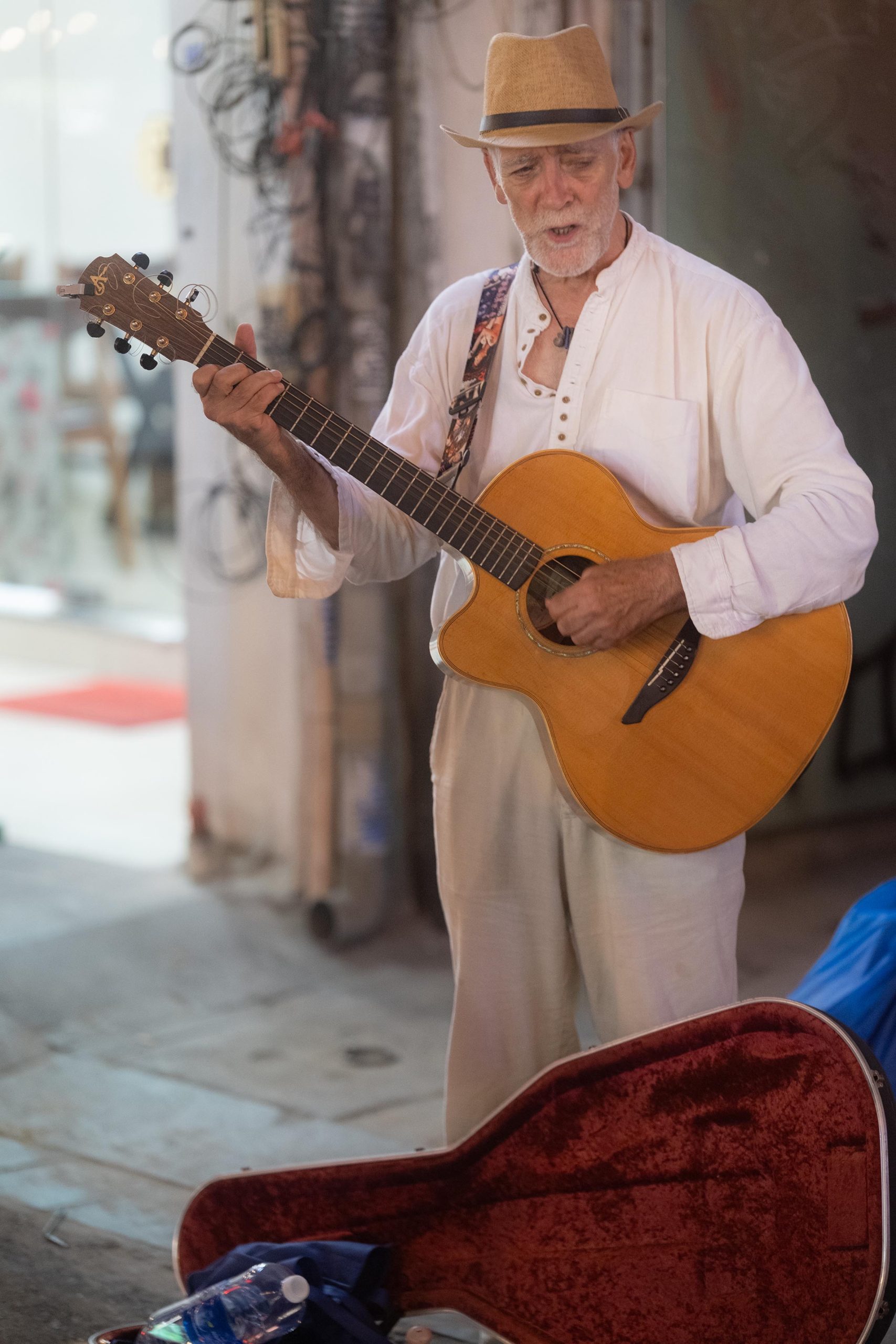
- Multiple stages for live music performances
- Various tourism offices offering excursions and travel services
- Money exchange booths
- Numerous convenience stores
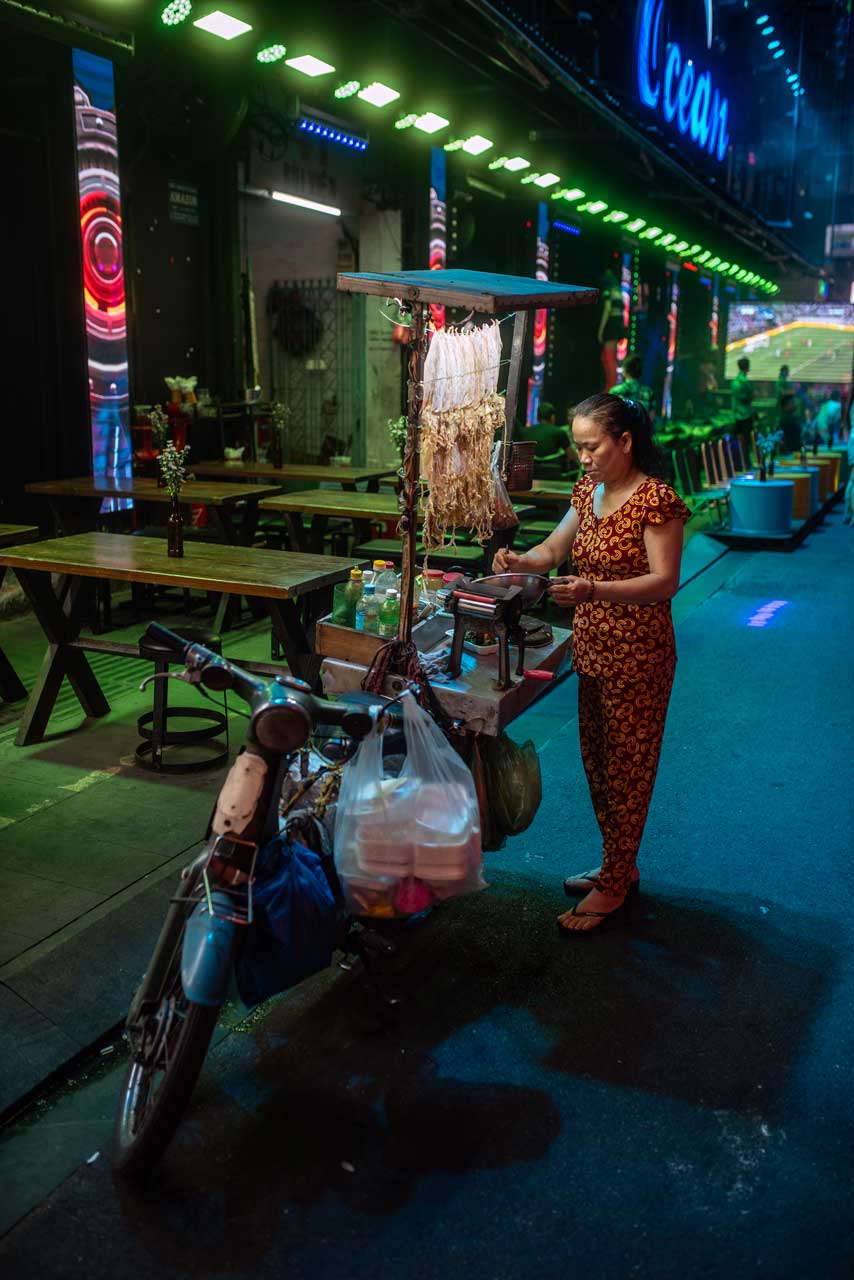
- Street food carts selling local delicacies
The street transforms dramatically between day and night. During daylight hours, it functions as a regular commercial street with shops opening around 7:00 AM. As evening approaches, typically around 5:00 PM, the atmosphere shifts as bars and nightclubs begin setting up their outdoor seating. Peak activity occurs between 9:00 PM and 2:00 AM, when the street becomes packed with tourists and locals alike.
In 2017, the local government officially transformed Bui Vien into a walking street on weekend evenings (7:00 PM to 2:00 AM, Friday through Sunday), prohibiting vehicles during these hours. This initiative included the installation of security cameras, enhanced lighting, and regular police patrols to promote visitor safety.
Address: Bui Vien Street, Pham Ngu Lao Ward, District 1, Ho Chi Minh City, Vietnam
Operating Hours:
- General street access: 24/7
- Most shops and restaurants: 7:00 AM – 10:00 PM
- Bars and nightclubs: 5:00 PM – 2:00 AM
- Walking street hours (weekends only): 7:00 PM – 2:00 AM
The street is particularly photogenic during the “blue hour” (just after sunset) when the neon lights contrast with the darkening sky. For photographers, the best vantage points include rooftop bars, such as the one atop Crazy Buffalo Bar, which offer panoramic views of the street’s illuminated landscape. The numerous alleyways also provide interesting compositions, especially when capturing the contrast between quiet residential life and the lively main street. There is a long view of the Bitexco tower from the main street that works well with the compression of a telephoto lens.